Process
First-Time Renovator's Guide to Home Extensions
Never extended a house before? This step-by-step guide covers everything from your first sketch to moving the furniture back in — with no jargon and no assumptions.
12 min read20 February 2026
Step 1: Work out what you actually need
Before you think about builders or architects, spend a week writing down every frustration with your current home. Not enough kitchen worktop space? No downstairs toilet? Nowhere to put coats and shoes? These pain points define your brief. Do not start with a solution ('I want a rear extension') — start with the problem ('We need more kitchen and living space'). The solution might be an extension, a loft conversion, a reconfiguration of existing rooms, or a combination. A good designer will identify the best approach. A bad one will just draw what you asked for.
Step 2: Understand the planning rules
Most single-storey rear extensions in Dorset fall within Permitted Development rights, meaning you do not need planning permission. But PD has strict rules: maximum depth of 3m (terraced and semi-detached) or 4m (detached) — or up to 6m (8m detached) with prior approval — maximum eaves height of 3m, and the extension cannot be higher than the existing house. If your plans exceed PD limits, you need a Householder Planning Application — this takes 8 weeks, plus the council's application fee, which is set nationally and revised each year (the Planning Portal lists the current fees). Conservation areas (Christchurch, Wimborne Minster, Swanage) have additional restrictions. Do not assume — check before you commit.
Step 3: Set a realistic budget
The build is typically 60–70% of the total project cost. On top of the builder's price, budget for: design fees (£250–£2,500 depending on complexity), structural engineer (£400–£800), building control (£400–£800), party wall surveyor if attached (£700–£1,500 per neighbour), kitchen or bathroom fitout, flooring, decoration, landscaping to repair the garden, skip hire, and a 15% contingency. A common mistake is spending the entire budget on the build and having nothing left for the kitchen or flooring. Write a complete budget before you sign a building contract.
Step 4: Hire the right people in the right order
The sequence matters. First, hire a designer or architect to draw your plans. Second, appoint a structural engineer to specify steels and foundations. Third, submit for building control approval. Fourth, get three builder quotes based on identical drawings and specifications — never compare quotes from different designs. Fifth, appoint the builder and agree a start date. This process takes three to five months from first sketch to builder on site. Rushing leads to mistakes, and mistakes in construction are expensive to fix.
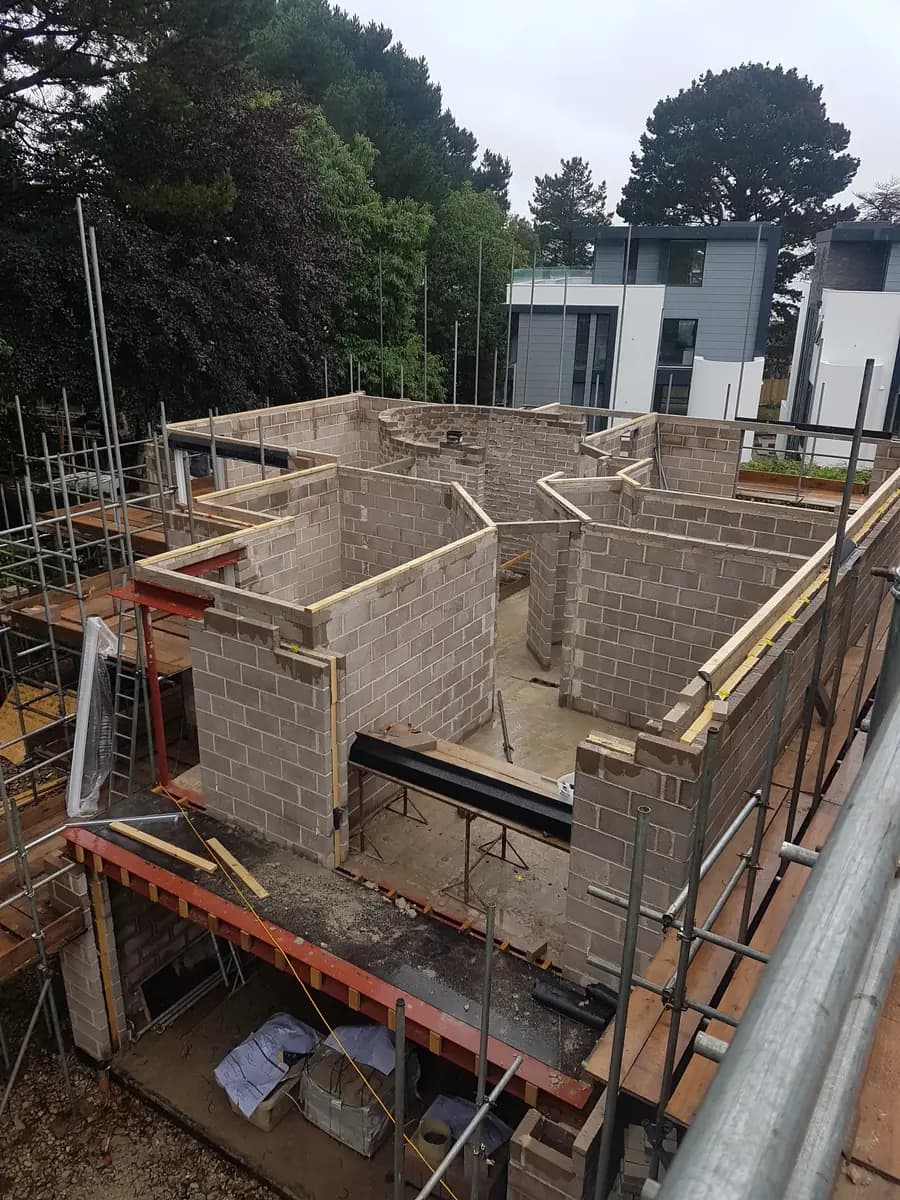
Step 5: Survive the build
A single-storey extension typically takes 10–14 weeks on site. The first three weeks are the most disruptive — foundations, drainage, and structural openings. Expect dust everywhere, no use of the affected rooms, and noise from 8am. Set up a temporary kitchen elsewhere in the house (a microwave, kettle, and mini fridge in the living room). Communicate weekly with your builder — a five-minute site meeting every Monday prevents small misunderstandings from becoming expensive problems. Keep a photo diary of the build; it is useful for snagging and a nice record to look back on.
Written by the PlanBuild team
9 years designing extensions and renovations in Poole, Dorset.
Ready to take the next step?
Related articles
How Much Does a Single-Storey Extension Cost in 2026?
A realistic breakdown of what a single-storey extension costs in Dorset — from foundations to finishing touches, including the costs nobody tells you about.
Read articlePermitted Development Rights: What You Can Build Without Planning Permission
A plain-English guide to what you can and cannot build under Permitted Development — and when you actually need to apply for planning permission.
Read articleOpen-Plan Kitchen Design: 5 Layouts That Actually Work
Not all open-plan kitchens work in practice. Here are 5 layouts we have designed that balance cooking, living, and dining — without the compromise.
Read articleReady to start your project?
Start with a free project review. No obligation — we call to check the service fits.
Every plan drawn in Poole, Dorset
Serving homeowners across Poole, Bournemouth, Christchurch, Wimborne, Wareham, and the wider Dorset area.