01 — Floor plans · Planning drawings · Building Regulations drawings
Floor plans for home extensions and renovation projects in Poole
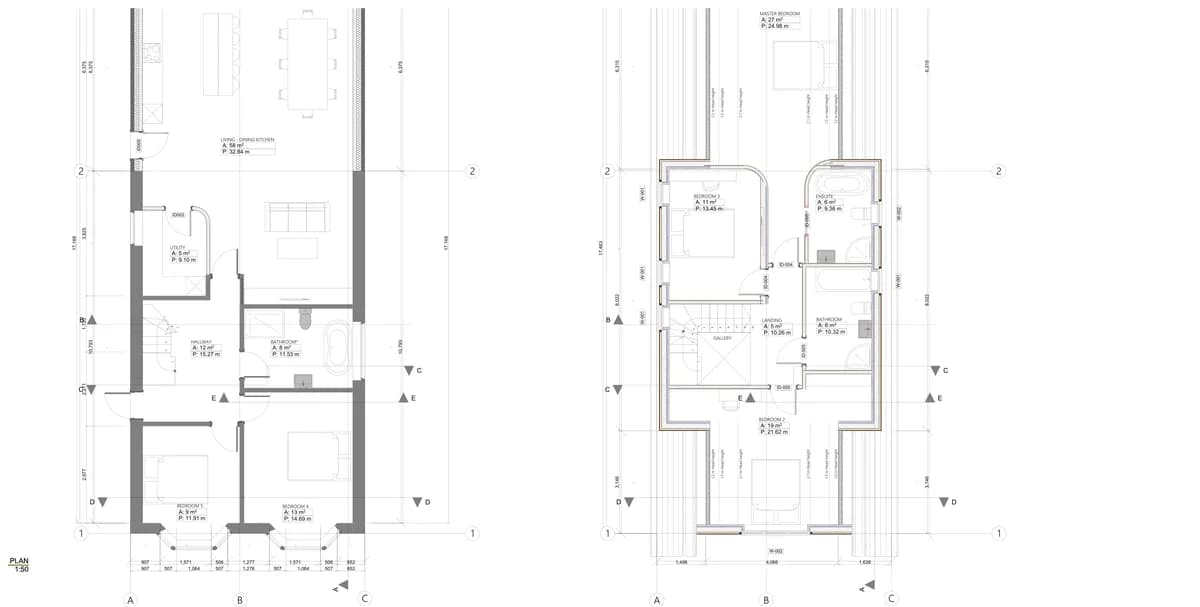
We draw plans of your house as it is now and plans of the changes you want. You need different drawings for planning permission, for Building Regulations approval and for a builder to price the work. We tell you which ones your project needs.
- ★ 5.0 on Google (15 reviews)
- Checkatrade 10/10 (20 reviews)
- We reply the same working day.
02 — Floor plans
Which drawings you need
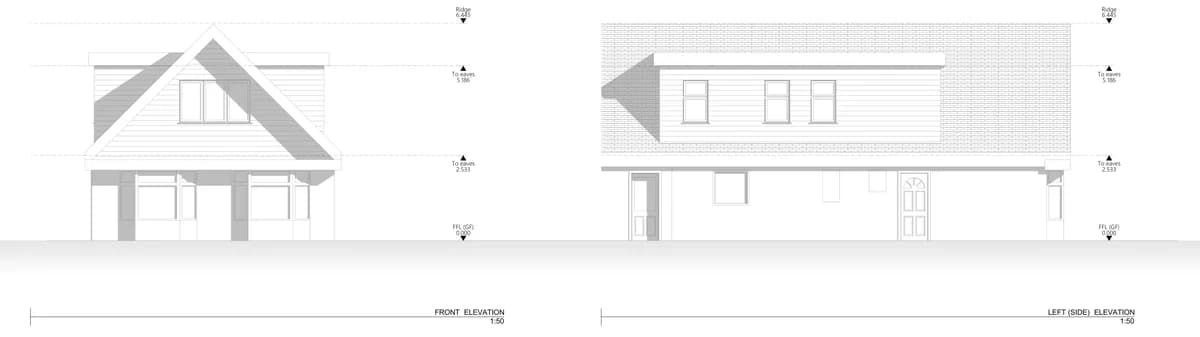
An estate agent's floor plan is not accurate enough for building work. A planning application needs drawings that show the outside of the house and what will change. Building Regulations approval needs drawings that show how it will be built. A builder needs accurate drawings to give you a price.
We draw plans for homes across Poole, including Parkstone, Branksome, Lilliput, Canford Cliffs, Hamworthy and Broadstone.
What this covers
- Plans of your house as it is now, drawn from measurements we take.
- Plans of the changes you want.
- Drawings for a planning application, if you need one.
- Drawings for Building Regulations approval.
- A check on whether you need planning permission. Some extensions can be built without it under rules called permitted development.
How we do the work
- 1
Stage 1
Tell us about the house
Send us the address, some photos, any plans you already have and what you want to change.
- 2
Stage 2
We tell you which drawings you need
For example plans for a planning application, drawings for Building Regulations, or structural calculations.
- 3
Stage 3
We draw them
We measure the house and draw the plans. You can use them to apply for approval or to get the work priced.
Why homeowners choose us
The people who draw your project are the people who build it. So the drawings are made to be built, not just to get approval, and we price each item on them before you commit.
Free
Free project review
Tell us what you want to do. We call you back the same working day to tell you what your project needs and whether it is worth doing. There is no cost and no obligation.
The price is agreed from the drawings
The build price only changes if you change the design.
One firm and one contract
You don't have to find and manage separate designers, engineers and builders.
You can stop after any step
The drawings are yours to use with any builder.
Can I do this to my house?
Answer three or four quick questions to see what your project is likely to need before you speak to anyone.
What your project is likely to need
Your answer appears here as soon as you have answered the questions.
How a building project works
Every extension, knock-through or loft conversion has four stages. We do all four.
- 01
Drawings
We measure your house and draw it as it is now. Then we draw the new layout.
- 02
Approvals
We apply for planning permission if you need it, and prepare the Building Regulations drawings. Building Control is an independent inspector. They check the work and sign it off.
- 03
Engineering
A structural engineer works out the size of any steel beams and foundations before building starts.
- 04
Building work
We do the building work and finish the rooms.
Floor plans are the first stage. Everything after them is based on the drawings.
What can go wrong, and how we stop it
What goes wrong
How we stop it
The price goes up once building starts.
We price the building work from our own finished drawings, so the price is agreed before work starts.
The steel beam is the wrong size, or rests on the wrong thing.
A structural engineer sizes the beam and what it rests on before building starts. Building Control checks it on site.
Old chimney breasts, pipes or cables turn up once the wall comes out.
We look at what the wall holds up and what runs through it before the drawings are finished.
A neighbour dispute holds the job up.
We tell you early if the Party Wall Act applies, so notices go out before the work is planned.
You find out too late that you needed planning permission.
We tell you at the free review whether you need planning permission, and we make the application if you do.
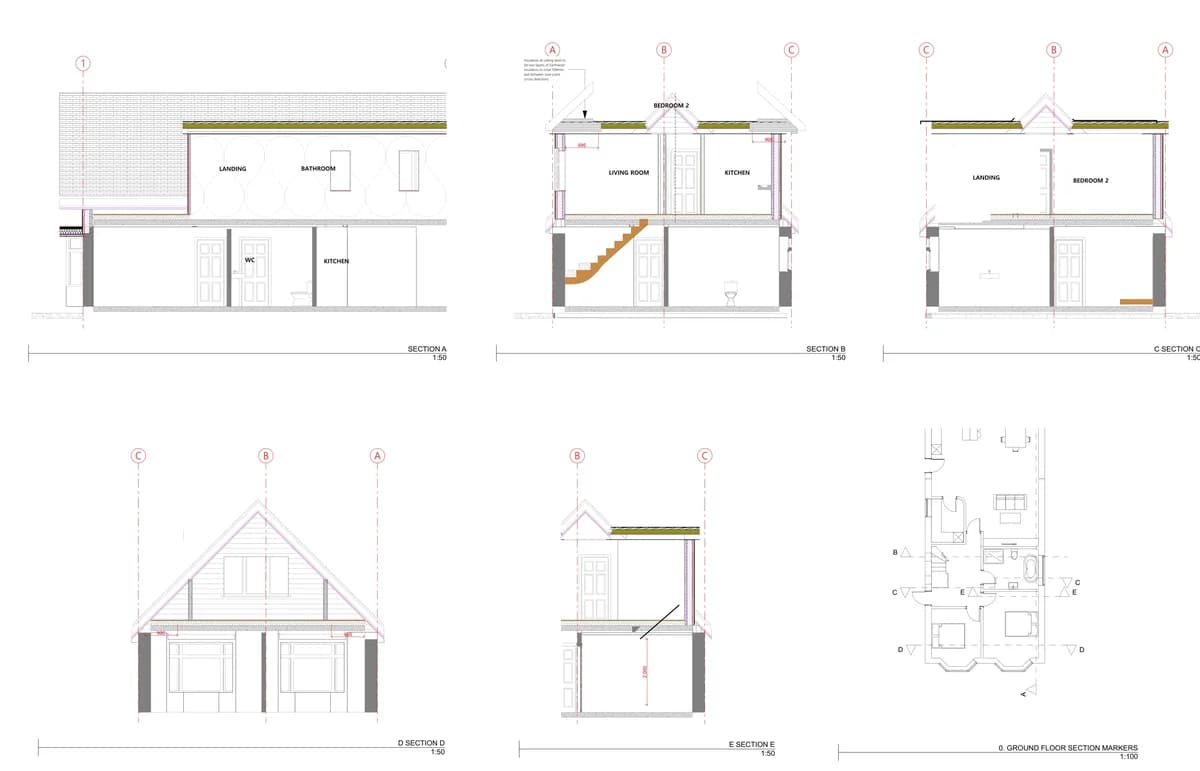
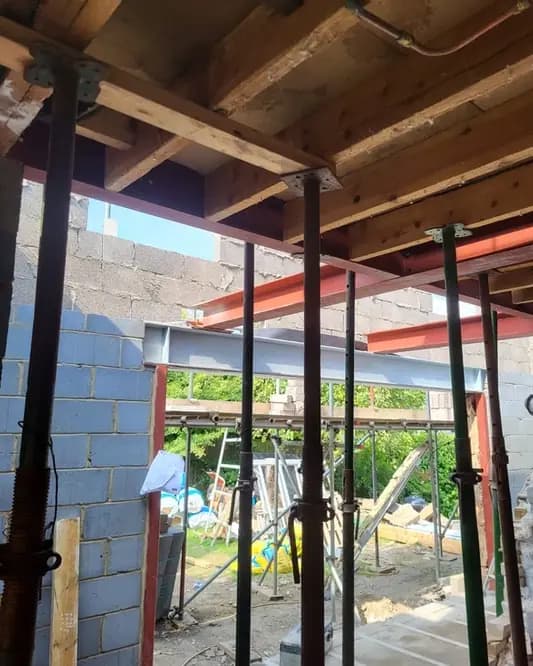
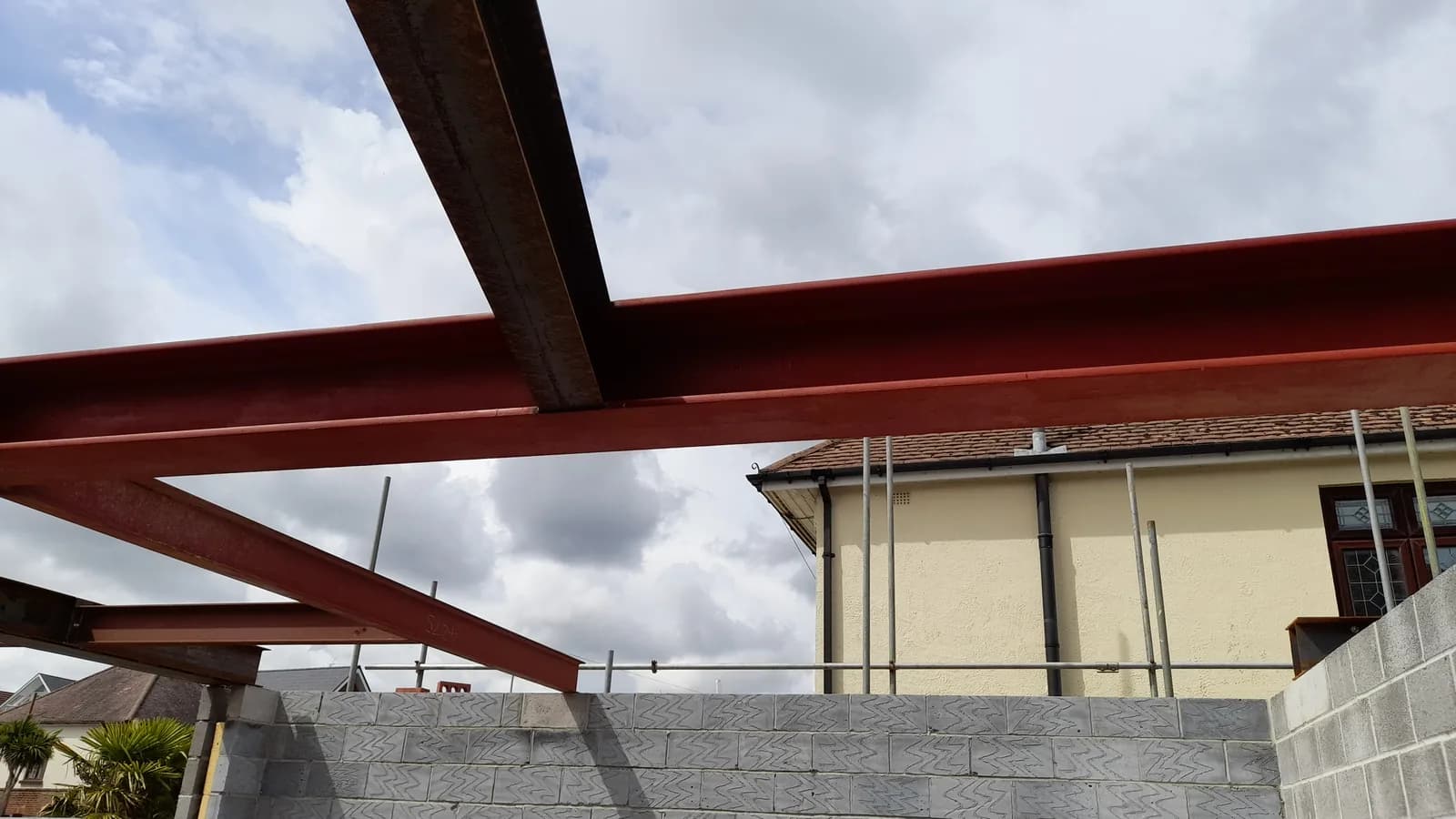
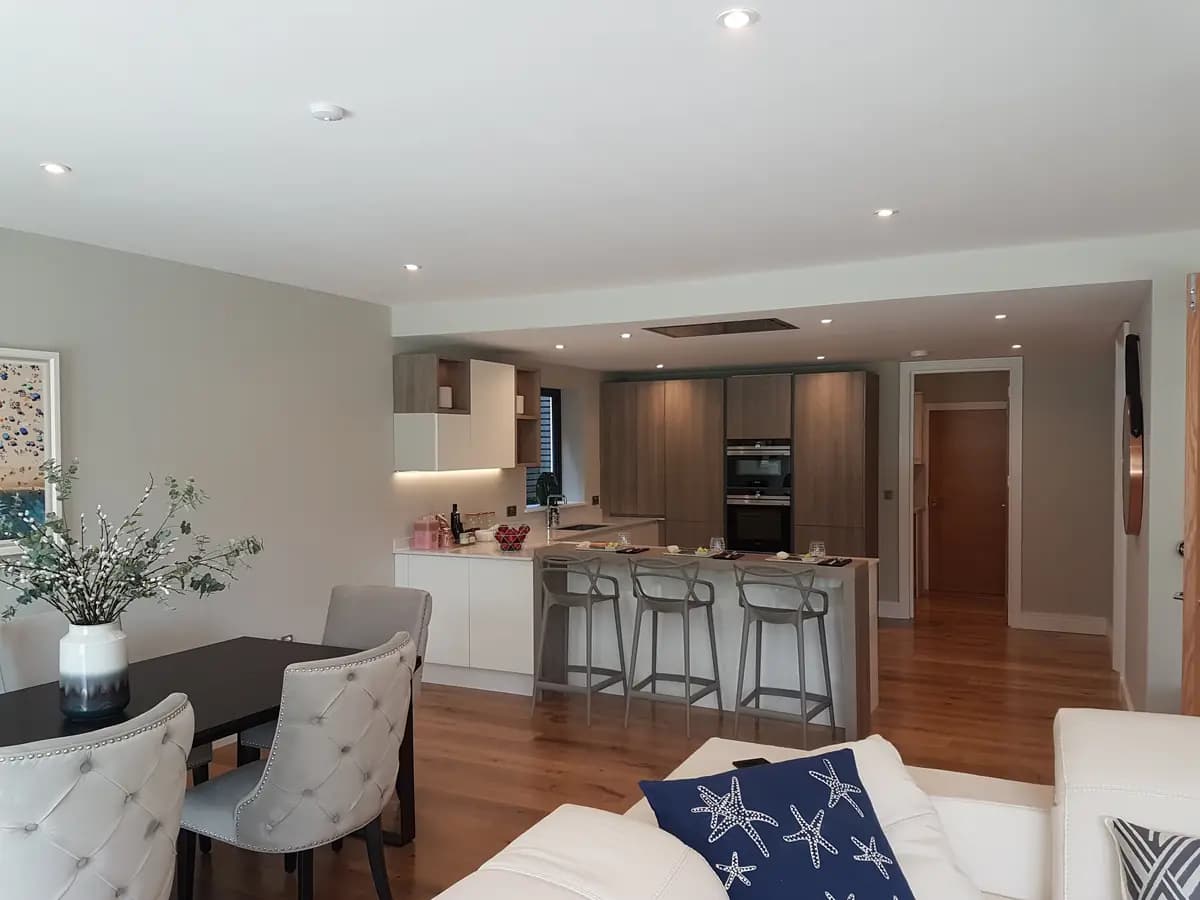
Floor Plans in Poole: photos from our jobs
How it works
There are five steps. You can stop after any of them.
You can stop after any step. The drawings are yours, and you can use them with another builder.
We build in Poole, Bournemouth, Christchurch and about 20 miles around them. For homes further away, our remote layout service works anywhere in the UK, and we can price the work, prepare tender documents and vet local builders.
Step 1
Free project review
Send us a few details or call. We look at what you want to do and tell you what it will need and whether it is worth taking further.
Free
Step 2
Layout Ideas Pack
We draw your home as it is now and up to three ways it could work, then fine-tune your favourite with you on a video call. Done remotely from your Rightmove link, floor plan or sketch, or in person with a measured site survey and a 3D point cloud scan.
Remote or in person
Step 3
Cost estimate
Once you have a layout you like, we estimate what it would cost to build.
Price agreed before you commit
Step 4
Drawings, approvals and engineering
Full drawings, structural calculations, and the planning and Building Regulations applications. The house is measured at this stage if it hasn't been already.
Priced after the estimate
Step 5
The build
Near Poole, we price the building work from the finished drawings, then do the work and finish the rooms. Further away, we price it, prepare the tender documents and vet local builders.
Price agreed from the drawings
What our customers say
- ★ 5.0 on Google (15 reviews)
- Checkatrade 10/10 (20 reviews)
- We reply the same working day.
“…they can do everything from start to finish for you.”
“…carried out layout drawings for a very reasonable amount. Josh also gave us a budget price to carry out the works.”
“I couldn't recommend Josh enough! He has been absolutely fantastic, nothing was too much trouble, he was happy to bounce lots of ideas back and forth until we were happy. He is polite, friendly and professional in every aspect. I would definitely be using his services again in the future when needed.”
“Josh got the plans for our extension completed and submitted very quickly. We had a number of amendments and obstacles to overcome but nothing was too much trouble for him. A very professional and efficient service.”
Is PlanBuild right for your project?
We are a good fit if
- You want an extension, a knock-through, a wall removed or a loft conversion.
- Your home is in or near Poole, Bournemouth or Christchurch.
- You want one firm to do the drawings, the approvals, the engineering and the building work.
- You want to see your options and a rough cost before you pay for full drawings.
We are not the right choice if
- Your home is more than about 20 miles from Poole, Bournemouth or Christchurch. Start with our remote layout service instead: it works anywhere in the UK.

How we help
You want more space or a better layout, but you don't know where to start, what it will cost, or who to trust with it.
We tell you what your project needs
At the free review we tell you whether you need planning permission, Building Regulations approval or a structural engineer, and what that involves.
You see your options before you commit
The Layout Ideas Pack gives you up to three layout options for your house, and the cost estimate tells you what your favourite would cost to build.
You know the cost before work starts
We price the build from our own drawings, so you are not relying on a builder's guess.
You deal with one firm
We do the drawings, the approvals, the engineering and the building work. You don't have to find, manage and chase separate firms.
Often done with this job: Structural wall removal, Kitchen knock-throughs, Single-storey extensions
Questions about Floor Plans in Poole
What floor plans do I need for a Poole extension?
It depends on what the drawings are for. Planning drawings show the council what you want to build. Building Control drawings show how the build will meet the building regulations. Builder quote packs give builders enough detail to price the job.
Can I use estate agent floor plans for builders?
Usually not on their own. Estate agent plans can help explain the layout, but builders and engineers normally need accurate dimensions, notes on what is changing and technical details before they can price the job properly.
Do floor plans need a measured survey?
If the project depends on accurate existing dimensions, yes. Photos and estate agent plans can start the conversation, but a measured survey means the drawings are based on accurate measurements.
Can PlanBuild help after the plans?
Yes. We can continue into planning drawings, structural calculations, Building Control, builder quote packs and the build.
Tell us what you want to change
Send a few details and we will call you back the same working day to tell you what your project needs. There is no cost and no obligation.
We build in Poole, Bournemouth, Christchurch and about 20 miles around them.
Step 1 of 3